
In a world where we are overwhelmed with digital information and AI can create it all for us, new, original research is a rare and refreshing find. And that’s what’s happened with St Helena Island – Belinda Daly has spent 2025 and 2026 researching the unknown facts and the untold stories connected to the social history of St Helena Island. St Helena Penal Establishment was a male only prison, where men were guarded by male prison warders. So, Belinda decided to research… WOMEN. And children. The most common reaction to this topic cemented the importance of this research – it was “Women? There ARE no women in the prison at St Helena.”
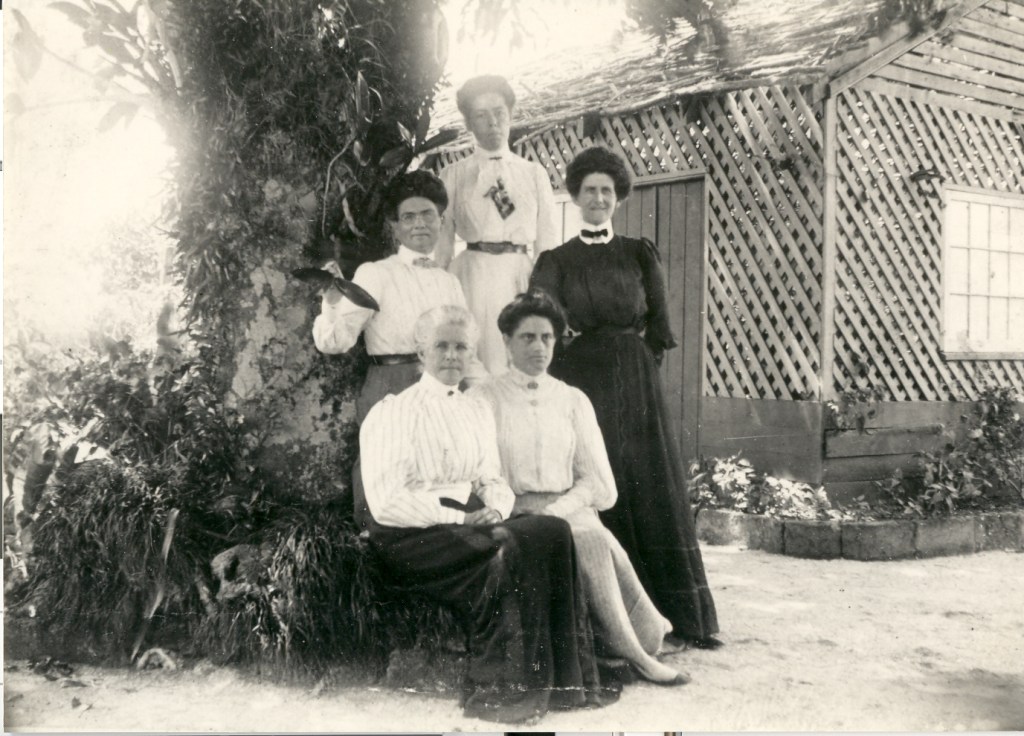
Women have long been erased from our historical narrative, which overwhelmingly documents the achievements and influence of men, particularly white men. What gets recorded in documents of the time then gets passed onto the next generation, and when women don’t appear in those recorded documents, they are quite literally erased from known history. This silencing of women’s contributions is all pervasive, as it quite literally rewrites history as one where women’s role in society was insignificant and their contributions far less than their male counterparts. This creates a dangerous perspective that distorts our view of the past and perpetuates the gender stereotypes into today.
St Helena Island proved no different. Belinda’s decision to focus her Griffith University Fellowship research on women and children was based on the fact that after many years of researching and writing stories of St Helena, women proved incredibly hard to find. A fleeting mention of “Mrs D. McPherson,” or Mrs J. McDonald’s “contribution to the gardens” was about all that could be surfaced to know that women WERE actually living on St Helena Island as part of the penal establishment. There was, however, no record of their identity, let alone a first name, for any of these women in official prison and government documents. If a story emerged involving a warders’ family, the male of the household spoke for everyone. Questions emerged – how many women and children were on St Helena during the prison era? What issues did they face? What were their contributions?
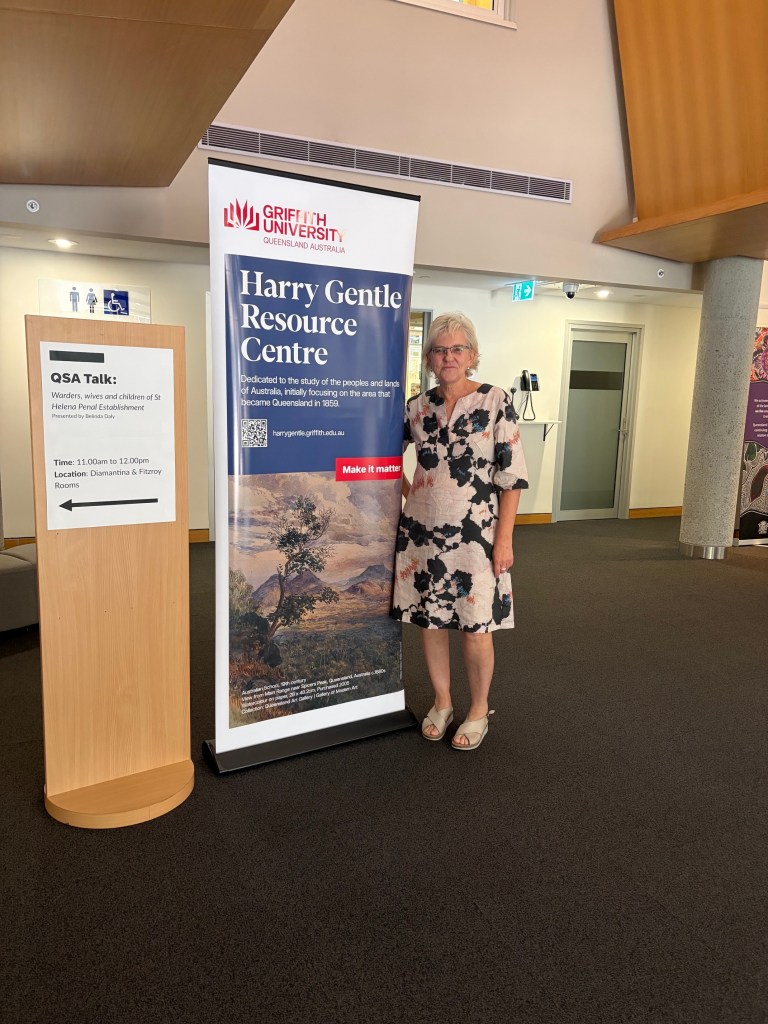
Let’s take a moment to acknowledge and thank Griffith University and the Visiting Fellowship that was made possible through the Harry Gentle Resource Centre (HGRC). The generous legacy gift of Mr Robert (Harry) Gentle, created the HGRC, which is ‘dedicated to the study of the peoples and lands of Australia, with an initial focus on early 19th century Queensland.’ It seeks to ‘document particularly the lives and experiences of those persons, groups and organisations that have not been the subject of historical investigation by collating an inventory of the diversity and claims on country that made up the early colonial period.’ The women’s project on St Helena Island fitted beautifully into this, having never been researched before. Belinda’s research findings were presented at the Qld State Archives on the 25th June 2026, and it was great to see many people in the audience who are connected to St Helena Island in various ways.
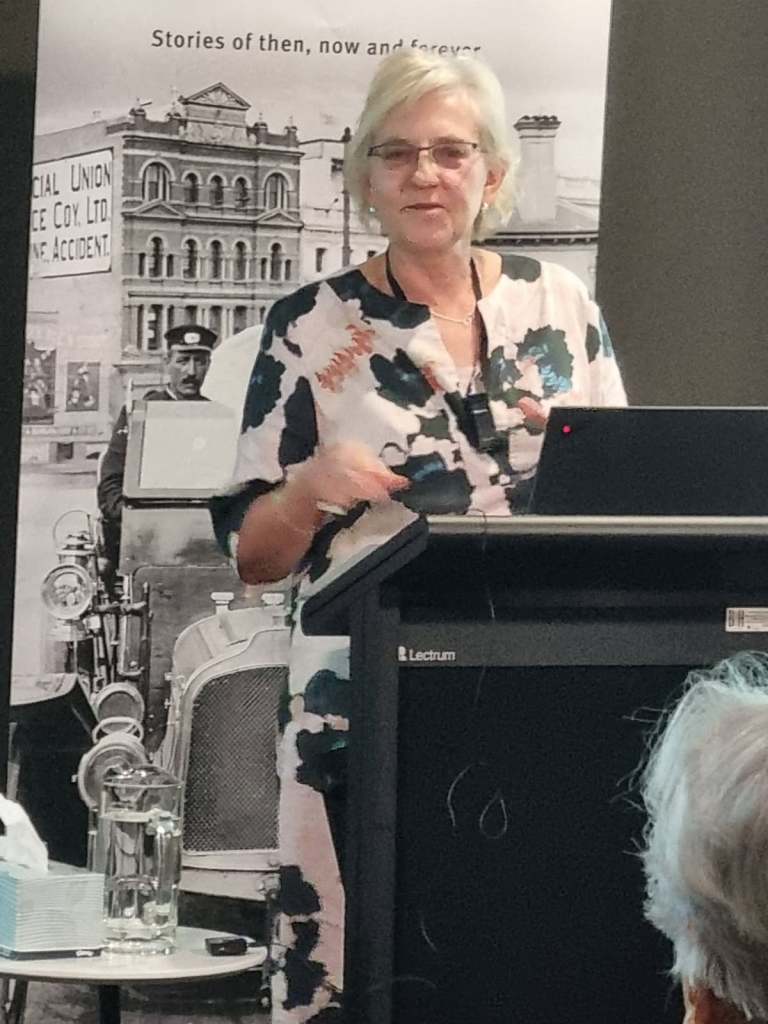
Belinda Daly’s full research report, detailing the aims, methodology, statistics, analysis and new findings has been published on the HGRC website. Warders, wives and children – The families of St Helena Penal Establishment – Harry Gentle Resource Centre Please take a look at the project page, as this provides a wide overview of women’s roles, contributions and issues faced on St Helena Island, as well as case studies and examples of particular women and family events. There are also lots of new statistics about the composition of families in each household, length of time spent living on the island, cultural background and births, deaths and marriages on the island. If you know you have a family member that lived as part of the warders’ community on St Helena Island, then this information is for you!

The St Helena Island Community’s next blog series will focus on St Helena PE. women and children from Belinda Daly’s latest research. As the HGRC information has a broader, holistic lens on the St Helena P.E. warder community, this blog series will focus on telling the detailed, nuanced stories of specific families, including individual women and events that occurred. To achieve that, we need to start where Belinda started – with the need to identify which warder families were living on St Helena Island as part of the St Helena Penal Establishment between 1867 and 1932 and then attempt to name the individuals within each family. This has been done – and we are proud to reveal that 47 families lived as part of the Warder’s community on St Helena during the prison era. Their surnames (below) are now finally part of the historical record.

These names have emerged by combing through original prison records, official inquiries, Colonial Secretary correspondence, birth and death certificates, newspapers and information from family historians and descendants. Belinda likened it to having a 500 piece jigsaw puzzle that needs to be painstakingly pieced together. One of the most frustrating aspects of any research is not being able to find all the puzzle pieces, and so for 2 of the warder families – Warder Samuel Seymour’s family and Warder John Howard’s family – many of the pieces are missing. But, for the other 45, the individual family members have been identified and individually named.
255 men, women and children lived on St Helena Island as part of the St Helena P.E. Warder’s community, between 1867 – 1932
Belinda Daly (2026)
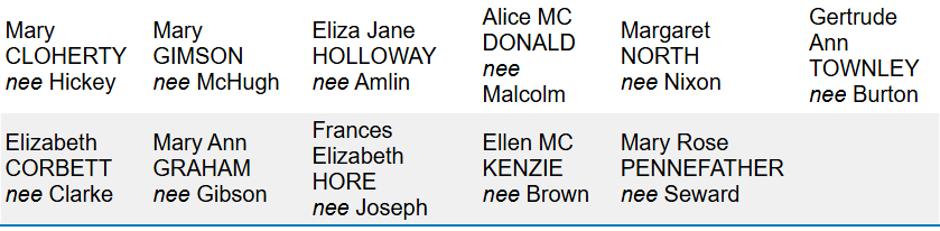
Finally, as the focus has always been on restoring women into the historical record, we will finish with naming the women who headed each of the 47 warders’ households. This pays tribute to the women of St Helena Penal Establishment who were instrumental in making a community of families thrive on an isolated penal settlement from 1867 – 1932. These women are now part of the known history of St Helena Penal Establishment and their names and stories will now provide a more complete and holistic telling of St Helena Island’s complex and unique history.
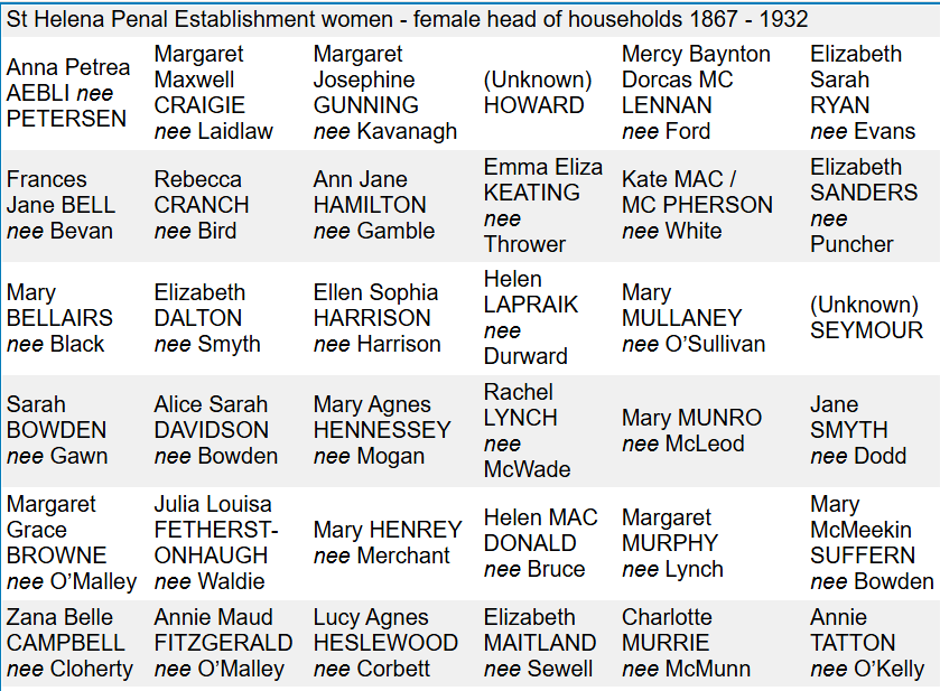
Look out for our next blog post, featuring the story of one of the women who found themselves living as a free woman under penal rule at the St Helena Penal Establishment.

