The earliest guards at St Helena Penal Establishment were prison warders working on the Prison hulk ‘Proserpine’ who transferred to St Helena along with the prisoners in 1866. They were accompanied by the Military Guard, 16 soldiers from the 50th Queen’s Own Regiment, who were rostered for short periods to maintain the security of the prison. While the warders and soldiers worked together to manage the construction and running of the prison, differences in opinion existed on the role of the Military Guards regarding prisoner discipline, the authority of the Superintendent and the living conditions provided to the soldiers. This led to a change in May 1869, when the 16 soldiers were replaced by 12 members of the Police Guard. With new regulations and standing orders established in 1870, the guard worked alongside the prison warders to maintain discipline until December 1872, when the decision was made to have all prison warders on the island.
| Name | Year | Military or Police Guard |
| Sergeant William Wallis | 1866 – | Initially in the Military Guard but then transferred to St Helena P.E. as a warder. |
| Captain Thomas Eden | 1867 – 1869 | Captain of the Military Guard and responsible for leading the 50th Queens Own Regiment. |
| Henry P. O’Neill | 1869? – 1873 | Was a constable in the Police Guard first and then became St Helena warder in 1873, leaving soon after due to an escape attempt under his watch. |
| Thomas Lownsborough | 1869? – 1873 | Lownsborough was Police Guard and then became Warder. Dismissed due to showing signs of insanity. |
| Donald Horton | 1869? – 1877 (approx..) | Donald was a policeman in the Police Guard, a warder and later charge with the crime of deserting his wife. |
Warders | Blog Stories – Military Guard and Police | |
| Early warders Creating an island community | ||
| Military Guard and Early warders Islands of Exile: Sarah and Helena Part 1 | ||
| 1866 staff and escape The first escape from the first family | ||
| Early Police and warders Wanted: Water Police Warders | ||
| Early Police / warders 3 Scottish men and a world of adventure | ||
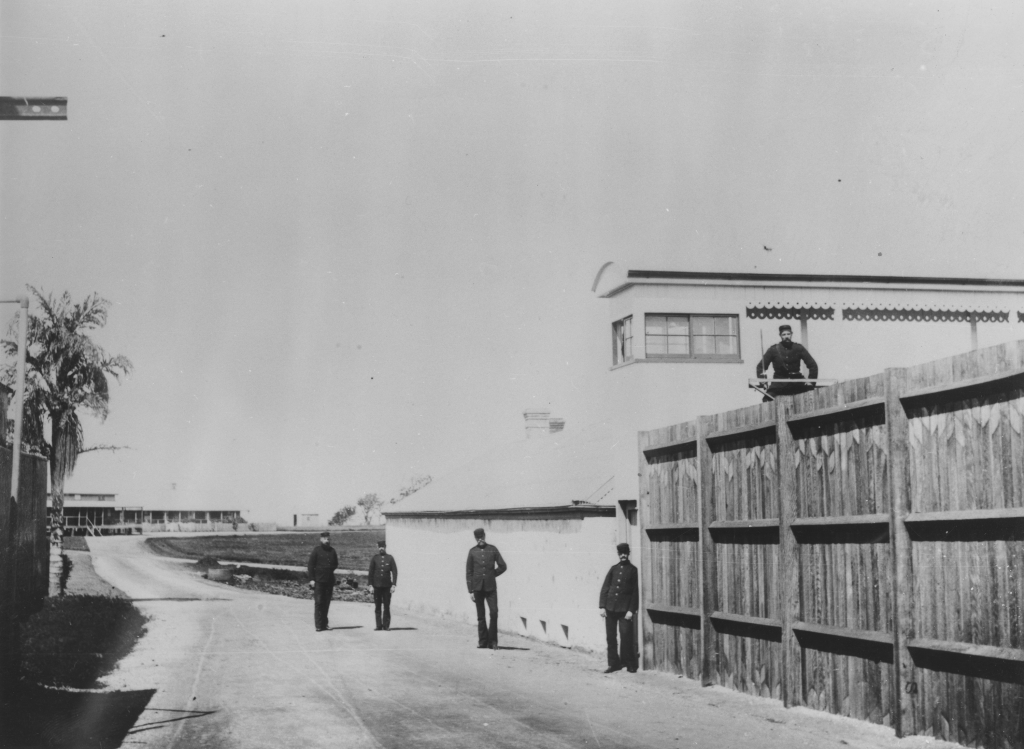
The St Helena Island Community records show 436 prison staff over the penal establishment period from 1866 – 1932, excluding the Military and Police Guard. The vast majority St Helena’s prison warders were from England, Scotland, Ireland and Wales, with a number of warders originating from Demark, Switzerland, Sweden and Germany. Native born warders hailed from many Australian states, but mostly Queensland. Many had previous police experience – 39 warders were employed within the Queensland Police Force within their career, 6 of the Prison Guard transferred over to the Penal Establishment as warders in 1872 and another 4 warders had employment in the police service in other countries. Many warders came from a military background, fighting in India, Crimea and 3 men involved in the Boer War in South Africa. 30 enlisted in World War I, either as current St Helena warders enlisting or as soldiers employed as warders on St Helena Island upon their return to Queensland.
| Name | Year | Country of origin and background |
| Donald Campbell | 1891 – 1901 | Scottish born Campbell had 12 years in the 91st Highlanders before emigrating to Qld and becoming a warder. He was often in charge of boats at St Helena. |
| Henry Clements | 1887 – 1890 1898 – 1908 | Born in Denmark, Henry was a seaman who deserted ship in NSW and spent time in gaol. After this he moved to Qld and became a warder at St Helena over 2 periods. |
| Barnett (Benjamin) Rudhall | 1889 – ?? | English born Warder Rudhall enlisted in the Boer War in May 1900, returned to Australia, returned to South Africa in 1901 and died in battle in 1902. |
| George Clifford Gilbert | 1916 | On return from WWI Australian born Gilbert was appointed Probationary Warder in April 1916. Gilbert died in November 1916 on St Helena Island. |
| William Galloway | 1909 – 1912 | Born in Sydney, Galloway became St Helena’s Warder/ Baker. He eventually enlisted in 1916 and was Killed in Action in 1918. |
Warders | Blog Stories – Warders’ countries of origin | |
| James Aird 1 night and 21,000 years on Stradbroke Island | ||
| James Aird Robinson Crusoe on a Quarantine Island | ||
| Octavious and Irwin Spreadborough A family affair – the Spreadborough Brothers | ||
| Frank Hills ‘Trooper’ Hills – one of the last men standing on St Helena Island | ||
| John Mitchell Remembrance Day 2018 – a tribute to the warder who did not make it home | ||
| John Burns John Burns – almost a World War I soldier/warder | ||
| Michael Mogan St Helena’s World War I ‘Digger’ warders | ||
| Benjamin Rudhall Remembrance of the St Helena Island Boer War Warder | ||
| Frederick Windibank Warders of Queensland’s 9th Battalion | ||
| Benjamin Rudhall The St Helena jigsaw…finding the pieces and creating the whole picture | ||
| Frederick Todd 100 years ago – 1920 to 2020 | ||
Various roles existed within the prison to ensure the day-to-day management, safety and security. 13 prison staff members worked as Superintendents or Acting Superintendents of the penal establishment, in charge of all aspects of the effective management of the prison, including disciplining warders and prisoners alike, ensuring adherence to regulations, creating island industries and construction programs and administration and reporting. 11 men served as Deputy Superintendent, Chief Warder or Acting Warder, responsible for managing all other warders, reporting infringements of both warders and prisoners, enforcement of order and discipline, superintend the arrival and departure of prisoners and supervision of the hospital. The Chief Warders were assisted by the Senior Warders, a role undertaken by 8 different men who assisted in keeping prisoners industrious and orderly and who conducted regular rounds day and night to ensure all warders were alert on duty and prisoners were in their correct locations. No Senior Warder role existed after 1921.
| Name | Year | Prison management role |
| James Ryan Superintendent | 1894 – 1915 | Irish born Superintendent James Ryan celebrated 50 years in the prison service when he retired at St Helena in 1915. His wife Elizabeth died on the island months before. |
| David Graham Warder, Senior Warder. Chief Warder, Acting Superintendent. | 1883 – 1893 1913 – 1924 | Scottish David and wife Mary Ann lived on the island in the 1880’s, with 2 daughters born on St Helena. David was Chief warder and Acting Superintendent until his retirement. |
| William Bowden Warder, Senior Warders, Chief Warder | 1913 | William was the longest serving officer on St Helena, beginning as a warder in 1871 and retiring in 1913. St Helena PE was the only prison he worked in in his whole career. |
| Henry Gimson Chief Warder | 1880 -1884 | English born Henry transferred from Woogaroo Asylum to St Helena in 1880. The Chief Warder’s house was repaired and 2 rooms added to fit his 4 children. |
| Patrick Roche | 1926 – 1931 | Patrick became the Acting Superintendent at a time when St Helena was downgraded to a prison farm. He is credited with creating a very successful ‘honor system’ for the prisoners. |
Warders | Blog Stories – Warders’ prison management roles | |
| Warders 1920 – 1921 One day in September on St Helena Island -Warders | ||
| John McDonald Superintendent, Inspector, pioneer and rescuer of shipwrecked survivors | ||
| Bob Murrie 100 years ago – the large, long life of Bob Murrie | ||
| John Aebli A Swiss Storekeeper for St Helena Island. | ||
| Henry Gimson History is like a box of jigsaw pieces | ||

Source: Laurie Collection, Qld Parks and Wildlife Service.
Warder roles in general had responsibility over the direct supervision of prisoners, using their authority to ensure regulations were adhered to and lock up prisoners deemed to be engaging in disorderly conduct. Specific warder roles might include being a boatman for the many crossings to the mainland, hospital dispenser, teacher, a Drill Instructor to practice handling of guns, Armoury guard, Acetylene Gas lighting, or Telegraph communication. Some warders were hired as Trade Instructors, who had skills in a specific trade that they then taught to prisoners in workshops and in the fields. These included Saddle making, Boot making, tailoring, bakery, butcher, sugar production, carpentry, tin smithing and blacksmithing and teaching.
| Name | Year | Prison role |
| Donald Smith Warder/ Trade Instructor Carpenter Gas Lighting. | 1880 – 1911 | Donald was the Trade Instructor Carpenter for 31 years and was also was paid £10 per year to attend to lighting the acetylene gas. He escaped injury in the gas explosion of 1888. |
| William Smyth Warder/ Trade Instructor Bootmaker, Saddlemaker Trade Supervisor | 1872 – 1888 1893 – ? | William Smyth became the T.I for both boot and saddle making, and also became the Trade Supervisor, overseeing the smooth operation and management of other Trade Instructors and prisoners in the boot makers, saddle makers and Tinsmith workshops. |
| Alexander McKenzie Warder/ Trade Instructor Sugar Boiler | 1873 – 1883 | Alexander began as warder and took over the sugar manufacturing role in 1876. He was deemed ‘a most useful officer’ but left when he bought a punt to start his own business. |
| Charles Henrey Warder Medical Dispenser | 1888 – 1890 1893 – 1924 | Charles was a wardsman in an Ingham hospital before becoming a Warder in St Helena P.E. in 1888. His medical skills were invaluable in the St Helena hospital, where he worked for 30 years dispensing medicine and treatments. |
| Henry Dodd Warder/ Trade Instructor Tinsmith | 1887 – 1893 1895 – 1898 | Henry was employed as a T.I. Tinsmith, but chose to leave that position to become a general warder. Henry is the only warder to be stabbed and killed by a prisoner within St Helena P.E. in 1898. |
Warders | Blog Stories – Warders’ prison roles | |
| Lime kiln Warders John Sanders An abundance of oysters and a load of lime | ||
| Baker Edward Heathcock The desert dwelling Heathcocks | ||
| George Buist Maltman, Soldier, Warder, Newsagent. The many lives of George Buist | ||
| Unionist Michael Mogan St Helena’s World War I ‘Digger’ warders | ||
Warders’ duties were strictly regulated, and adherence to strict routines and responsibilities was paramount. 8 hour rosters throughout the day and night ensured a constant guard was kept over prisoners. Warders had to stamp the “Tell Tale Clock” at short, regular intervals to ensure they were walking around patrolling the wards and passageways and not resting or sleeping. Non-adherence to regulations would result in a misdemeanour recorded by the Chief Warder, resulting in a caution, a fine, suspension or dismissal from the prison service. Ironically, 5 warders are known to have found guilty of criminal offences in their lives, which would have provided an unsettling experience facing the justice system from the other side. One Warder, Ludwig Rowe, was a policeman, a warder, a WWI solider and finally a criminal, who found himself incarcerated in both Brisbane Prison and St Helena Penal Establishment as a prisoner in 1921 – 1922.
| Name | Year | Misdemeanours and crimes |
| William Tatton | 1883 – 1889 | William was caught tampering with the ‘tell-tale clock’ one night. He had neglected to punch it a 2am and tried to make the mark himself. An inquiry saw him get a fine and ordered to repay for the cost to repair the clock. |
| Andrew Lapriak | 1868 – 1880 | After duty finished, Andrew Lapraik slept in the stockade guard room, but left his revolver under the pillow when he left the next morning. It was found by a prisoner and he was dismissed. |
| Augustus Ainsworth | Feb. 1912 – Nov. 1912 | Augustus was employed as the prison baker. He was dismissed after 9 months for conveying a letter from prisoner Thomas Silver to another man in Brisbane. |
| Hans Baruel | 1873 | Danish born Hans was employed as a St Helena warder in 1873 and was suspected of bringing alcohol onto the island. He was found guilty of embezzlement of money in 1874 and sentenced to 2 years Hard Labour. |
| Isaac Canning | 1886 – 1888 | John Canning was accused of a number of offences while warder and dismissed for being drunk on duty in 1888. In 1903 he was accused of stealing and in 1904 aggravated assault against his wife, for which he was jailed for 2 months. |
Warders | Blog Stories – Warders’ misdemeanours and crimes | |
| Ludwig Leichardt Rowe World War 1 Soldier, St Helena Warder and St Helena Prisoner | ||

Source: Qld Parks and Wildlife service
Daily life on St Helena included living in 2 dormitory style barracks with a sleeping space, storage locker and attached bathroom. Basic meals were supplied, cooked in the prison kitchens and brought across to warders. The earlier prison era saw many issues with the food supply, with limited flour, spoiled meat and complaints about the size of the ration allowance. Extra meat, sugar and food rations could be bought from the store in later years. Leisure time when off duty was spent on the island, and warders engaged in fishing, Rifle Club, woodworking, gardening, collecting specimens for the Qld Museum, card games and reading. A special recreation room was built in the 1910’s with a Billiard table, and tennis courts, a cricket pitch and a swimming pool created for the sole use of warders. One strict rule limited one form of recreation – no alcohol was allowed on the island at all.
| Name | Year | Recreation and Leisure pursuits |
| Peter Brown. Carpenter | 1869 – 1874 | Peter and 4 other warders used their woodworking skills to create mosaic furnishings from the vine forest being felled on St Helena. |
| Donald MacPherson, Warder | 1874 – 1891 | Donald’s unusual leisure pursuits involved collecting specimens from St Helena’s natural environment to contribute to the Qld Museum collection. |
| John Murphy Warder | 1881 – 1892 | John Murphy, along with many St Helena Warders, participated in competitions as part of the St Helena Rifle Club. John was often at the top of the leader board, indicating his skill level with shooting |
| Robert McConkey, Tinsmith | 1914- 1917 | The St Helena swimming enclosure was built in 1916 for the enjoyment of Warders. Robert McConkey died after diving in the pool at night in shallow sea conditions in 1917. |
Warders | Blog Stories – Warders’ recreation | |
| Aird, Brown, Olson, Bowden, Craigie Whittling away the hours | ||
| Aird, Brown, Olson, Bowden, Craigie The last of the Tulipwood | ||
| Frederick Windibank Warders of Queensland’s 9th Battalion | ||
| Frank Hills ‘Trooper’ Hills – one of the last men standing on St Helena Island | ||
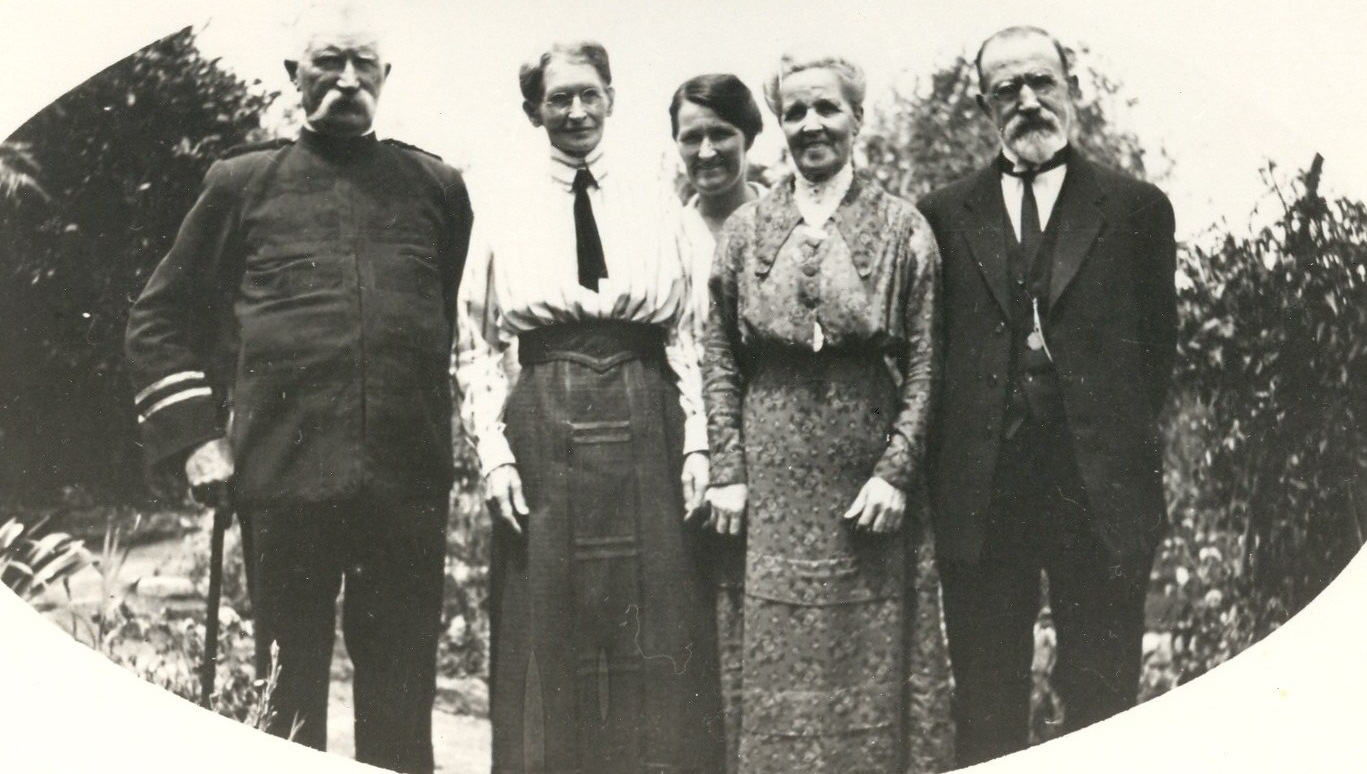
To work on a prison island added an extra level of difficulty for the Prison Warders whose role was to ensure the security of the prison and care for the welfare of the prisoners. Warders were generally rostered for 5 or 6 weeks on and a week off, which created an enduring feeling of isolation from the mainland. This took a toll on warders, who found themselves separated from their family living on the mainland and from the everyday social life that other warders enjoyed. There was also the cost of maintaining 2 accommodations, on St Helena and on the mainland. However, cottage style residences did exist on St Helena Island and 47 families are recorded in the St Helena Island Community database as living in them in the prison era. The Superintendent, Chief Warder, Senior Warder, Storekeeper/ Clerk, Teacher and Trade Instructors were all supplied with a family cottage as part of their employment benefits and could have their wife and children living on the island with them.
| Name | Year | Family |
| Superintendent – John McDonald | 1866 – 1882 | John and his wife Alice established the Superintendents house and garden. Alice died on St Helena and was buried on the mainland. |
| Storekeeper & Clerk – Gregory McLennan | 1895 – 1901 | Gregory and his wife Mercy had 8 children on St Helena. Since the school was closed, a teacher lived on the island to teach them. |
| Chief Warder – James Hamilton | 1866 – 1895 | James and wife Ann had 5 of their 9 children born on St Helena. Daughter Frances died there but is not buried on St Helena. |
| Senior Warder – Charles Davidson | 1874 – 1913 | Alice Bowden lived on the island as a child and them married Charles Davidson. She then gave birth to her own children on St Helena Island. |
| School Teacher – Walter Hore | 1884 – 1891 | Wife Frances gave birth to 2 children and buried 3 children on St Helena Island. Their daughter Edith was the pupil teacher also. |
Other Blog post titles | Blog Stories – Prison management families | |
| David and Mary Ann Graham Profiling Grandmas and Grandpas | ||
| David Graham and Grace Graham Cemetery secrets and community conversations | ||
| John and Alice McDonald St Helena Island Women campaign | ||
| Aebli Family More women for St Helena Island – the arrival of the Aeblis | ||
In 1874, the first of 12 four-bedroomed Married quarters were built specifically for warders and demand for these always outstripped supply. In 1881, 15 warders and trade instructors lived in cottages and 2 families were living in tents. Warders’ families averaged 7 children per family and the Cloherty family remained the largest with 13 children. Such was the large number of children that St Helena school No. 12 was established on the island and a Department of Education School teacher brought in to teach them in the specially designed schoolhouse which doubled at the Church. By the late 1880’s, warders pleas for a family home on the island were constant, and in early 1891, following an outbreak of Scarlet Fever, general warder families were removed and banned from living on the island again.
| Name | Years | Family information |
| Charles Holloway | 1874 | Wife Eliza gave birth to 2 children and buried 2 children at St Helena Island. 6 of the children attended the school. |
| John Labbett Sanders | 1880 – approx. 1891 | John began as a Warder and then became the T.I. Stonemason. His wife Elizabeth arrived from England with 2 daughters and 2 sons were born on St Helena. |
| John North | 1870 – 1884 | John and wife Margaret had their first child on St Helena. John was a Warder, then the school teacher, he conducted Divine Service and finally was the Storekeeper. |
| Samuel Seymour | 1866 – | The first warder to live on St Helena in a hut in 1866. His daughter raised the alarm in 1866 when 2 prisoners attempted to escape. Little is known about this family. |
Warders/ Families | Blog Stories – Warder families | |
| Women on St Helena | 10,9,8,7,6,5,4,3,2,1 females on St Helena Island in 1871 | |
| Warders’ Children’s cemetery | St Helena Island free eBook | |
| John Howard | Has anyone seen John Howard? | |
| Warder Families | RED ALERT: Scarlet Fever cases DOUBLE | |
| Edmund Knight | St Helena Solider, Warder and Husband | |
| Murrie Family | ‘We could go anywhere here, we were only youngsters.’ Bob and Fred Murrie. | |
| Murrie Family | 100 years ago – celebrating the St Helena Island mothers | |
| Frederick McMunn | All in the family – siblings on St Helena | |
